
How to Create a Waldorf-Inspired Play Space at Home


A beautiful play space doesn’t need to be filled with toys.
In fact, sometimes the simplest spaces invite the biggest adventures.
A Waldorf-inspired play space focuses on natural materials, open-ended toys, and objects that leave room for a child’s imagination. Instead of showing children exactly how to play, the environment gives them the freedom to create their own worlds, stories, and games.
Start With Less
When children are surrounded by too many toys, it can sometimes be difficult to decide where to begin.
Try displaying a smaller selection of carefully chosen toys on low, accessible shelves. Toys can be rotated from time to time, making familiar pieces feel exciting again.
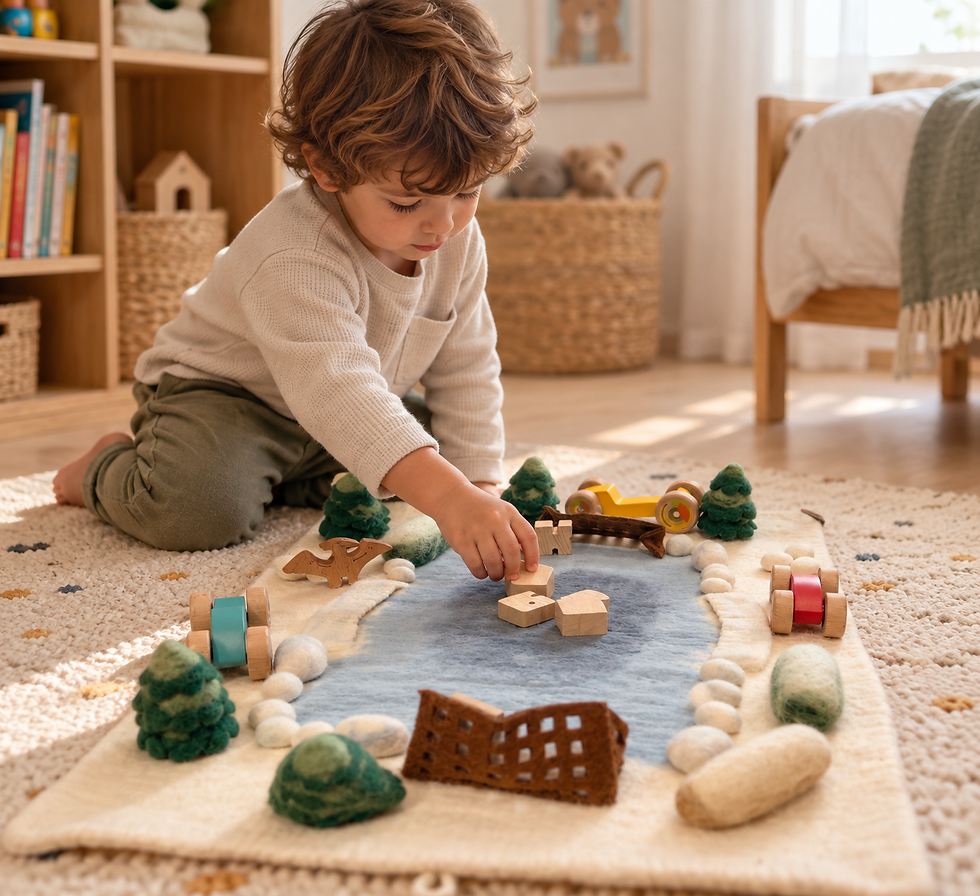
A few wooden animals, felt characters, building pieces, and a play mat can become an entire world.
Today they might be a forest.
Tomorrow, a village.
Next week, the same pieces might become part of an imaginary journey across the sea.
That is the beauty of open-ended play.
Choose Natural Materials
Wood, wool, felt, cotton, and other natural materials bring warmth and texture into a child’s environment.
They also create a very different sensory experience from toys made entirely from plastic.
A wooden figure feels different from a soft felt animal. A wool landscape can become a mountain, a field, or a magical forest. These variations in texture, shape, and weight give children more opportunities to explore through their senses.
At Tommy Luv, we especially love toys that are beautiful enough to become part of the home while still being made for real, everyday play.
Create a Waldorf Play Space With Small Worlds
Small-world play is one of the easiest ways to encourage imaginative storytelling.
Start with a simple landscape or play mat and add a few characters.
You might include:
Wooden animals and figures
Felt animals and finger puppets
Trees and natural elements
Small houses or structures
Scarves or fabric pieces
Simple wooden building toys
There doesn’t need to be a finished story.
The child creates it.
A Gruffalo-inspired forest, a farm, an enchanted garden, or a tiny village can all begin with the same handful of open-ended pieces.
Keep Toys Within Reach
A child-friendly play space should invite independent play.
Low shelves, small baskets, and simple storage allow children to see their toys and choose what they would like to play with without needing an adult to organize the activity for them.
Beautiful storage can also become part of the room rather than something that needs to be hidden away.
Leave Space for Imagination
One of the most important ideas behind Waldorf-inspired play is surprisingly simple:
Not everything needs to look completely finished.
A very detailed toy already tells us what it is.
A simple wooden or felt piece can become many things.
Children fill in the missing details themselves — and that is where imagination begins to work.
Build a Collection Slowly
Creating a meaningful play space doesn’t mean buying everything at once.
Start with a few versatile pieces that can be combined in many different ways.
A quality wooden toy, a felt landscape, several animals or characters, and a few open-ended accessories can provide countless possibilities for play.
Over time, new pieces can be added to the collection and mixed with toys your child already loves.
The goal isn’t to create the perfect playroom.
It’s to create a space that quietly says:
Come and imagine.
At Tommy Luv, we carefully select natural, wooden, and handmade toys that encourage children to slow down, create stories, and discover their own way to play.
Because sometimes the simplest toy can become the beginning of the biggest adventure.
Natural Toys for Little Wonders.


Comments